
Injury prevention is often misunderstood. Many people think avoiding injury means doing less, but in reality, it means preparing your body to handle more.
This is where injury prevention strength training becomes essential.
Rather than waiting for pain or injury to occur, physiotherapists focus on building strength, control, and resilience to reduce risk before problems arise.
Why Injuries Happen
Most injuries are not caused by a single moment, but by accumulated stress over time.
Common contributing factors include:
- Muscle imbalances
- Weak stabilising muscles
- Poor movement patterns
- Lack of progressive overload
- Insufficient recovery
Strength training physiotherapy addresses all of these factors, making it one of the most effective tools for long-term injury prevention.
Key Principles of Injury Prevention Training
1. Focus on Movement Patterns
Rather than isolating individual muscles, physiotherapists prioritise functional movements such as:
- Squats
- Lunges
- Hinges (e.g. deadlifts)
- Push and pull movements
These patterns reflect real-life and sport-specific demands.
2. Build Stability First
Before increasing load, it’s essential to develop control. This includes:
- Core stability
- Hip stability
- Shoulder stability
These are the foundations of effective physiotherapy strength exercises.
3. Train Unilaterally (Single-Leg/Single-Arm)
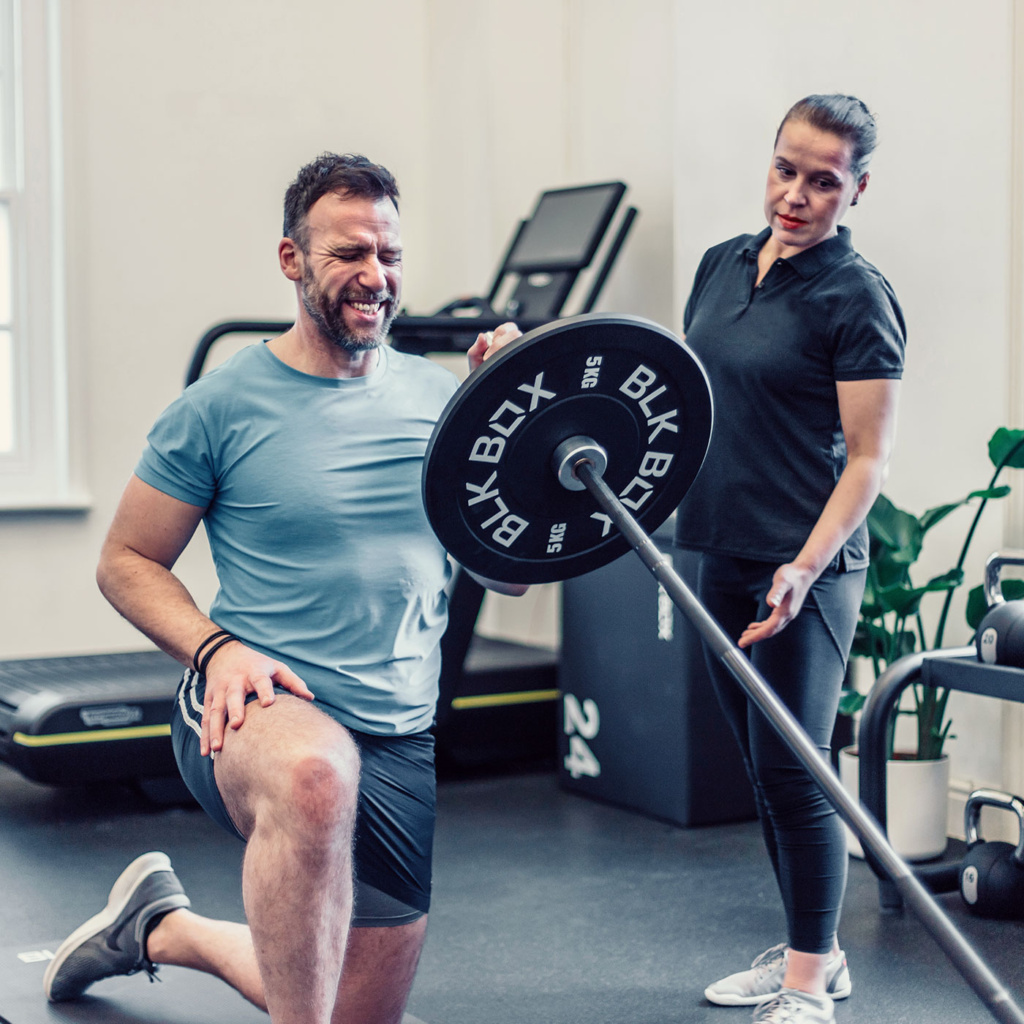
Many injuries occur due to imbalances between sides. Single-leg exercises like split squats help address these asymmetries.
4. Progress Gradually
One of the biggest causes of injury is doing too much, too soon. A structured programme ensures safe progression.
Essential Injury Prevention Exercises
A well-rounded injury prevention workout typically includes:
- Deadlifts
Strengthen the posterior chain and reduce back injury risk - Split Squats
Improve single-leg strength and balance - Planks and Anti-Rotation Work
Build core stability - Resistance Band Exercises
Enhance joint control and activation - Nordic Hamstring Curls
Proven to reduce hamstring injuries
These exercises form the backbone of sports injury prevention exercises across multiple disciplines.
The Role of Strength Training in Rehabilitation
For those recovering from injury, strength training becomes even more important.
Rehabilitation strength exercises help:
- Restore muscle function
- Improve movement patterns
- Bridge the gap between physio and full training
The Ten Approach: Strength Meets Science
At Ten, injury prevention is integrated across services:
- Physiotherapists identify weaknesses and imbalances
- Trainers implement structured strength programmes
- Pilates improves control and mobility
This creates a complete system for strength training injury prevention.
Who Should Be Doing This?
Everyone—from beginners to elite athletes—benefits from structured strength training.
It’s particularly important for:
- Runners
- Desk-based professionals
- Gym-goers increasing training intensity
- Anyone with a history of injury
Final Thoughts
Injury prevention isn’t about doing less it’s about doing the right things consistently.
With expert guidance and structured physio strengthening exercises, you can build a body that’s not just stronger, but more resilient.