
Understanding lower back pain
Lower back pain can present in many different ways. For some people, it is a sharp catch when bending or lifting, a dull ache after training or sitting for too long, or a recurring stiffness that stops them from enjoying exercise. Whatever form it takes, it rarely arises from a single cause. Weakness through the glutes, hips or core can change how the lumbar spine moves. Limited hip mobility can force the back to compensate. Previous injuries or postural habits may lead to overuse of some muscles while others underperform. As a result, the lower back often takes more strain than it should, and pain becomes a signal that the whole chain needs attention.
The scale of the issue is huge. The World Health Organisation estimates that 619 million people globally were affected by low back pain in 2020 alone, with that figure expected to rise to 843 million by 2050. It is also the single leading cause of disability worldwide, which shows why proper recovery, movement and rehabilitation matter.
Why Reformer Pilates helps
Pilates is often recommended for people with back pain because it targets the deep core and hip muscles that support the spine. The NHS notes that a Pilates‑inspired workout can improve the strength and flexibility of the muscles that support the back, and regular practice can help with posture, muscle tone, balance and joint mobility, while also relieving stress and tension. Reformer Pilates adds another dimension. The moving carriage, footbar and adjustable springs allow you to work with or against resistance, so exercises can be made gentler or more challenging depending on your symptoms. This allows the body to be strengthened without overloading the lumbar spine.
Many forms of exercise focus on a single outcome – strength, flexibility or cardio – but Reformer Pilates addresses several at once. Controlled movements improve awareness and alignment. Spring resistance builds strength through the hips, glutes and core. Supported positions encourage better posture and allow you to work within pain-free ranges. Over time, this helps distribute the load more evenly throughout the body, reducing the tendency to collapse into the lower back when you run, lift, or sit.
Key exercises for lower back pain
A well‑structured programme will look at how your entire body moves, rather than isolating the back. If your pain is severe, persistent or linked to trauma, seek professional advice from our team before starting a new exercise regimen. Otherwise, the following exercises are commonly used to support recovery from lower back pain. They can be performed with body weight, on the mat or on the Reformer.
- Pelvic tilts: This gentle movement improves awareness of the pelvis and lumbar spine. Lying on your back with knees bent and feet flat, you slowly rock the pelvis so the lower back moves toward and away from the mat. The aim is to explore movement, not force the back flat. This exercise mobilises the spine and teaches you how pelvic position influences back comfort.
- Dead bug variations: The dead bug is an excellent core stability exercise because it requires you to move the arms and legs while keeping the spine still. Starting in a tabletop position on your back, you extend one arm and the opposite leg, then return to the centre and repeat on the other side. The key is keeping the abdominal muscles engaged as if wearing a corset, so you don’t strain the lower back. On the Reformer, similar patterns can be practised using straps, allowing you to start gently and build control.
- Glute bridges: Weak hamstrings and gluteal muscles are often culprits in lower back pain. To perform a bridge, lie on your back with knees bent and feet hip‑distance apart. Press through the feet to lift the hips until your knees, hips and shoulders form a diagonal line, then lower with control. Focus on engaging the glutes and keeping the movement smooth. On the Reformer, the spring tension can increase the challenge without adding compressive load to the spine.
- Toe taps: In the tabletop position, lowering one foot toward the floor and returning with control trains the deep core muscles and hip flexors. The key is to keep the pelvis and spine steady, moving only the leg. Only lower the leg as far as you can without changing the shape of your spine.
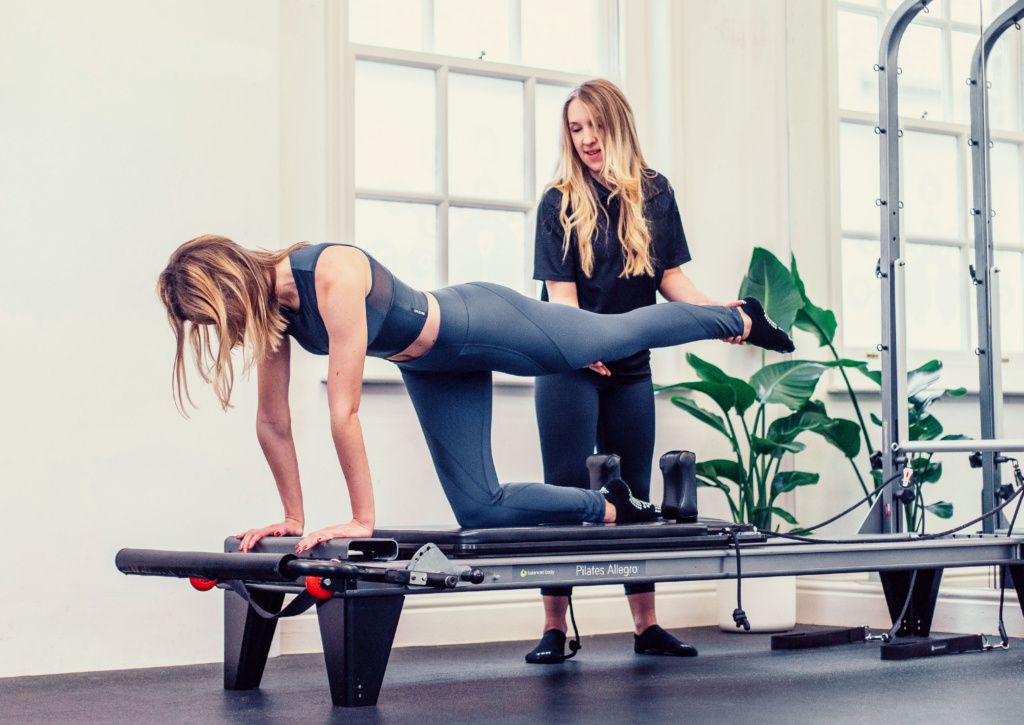
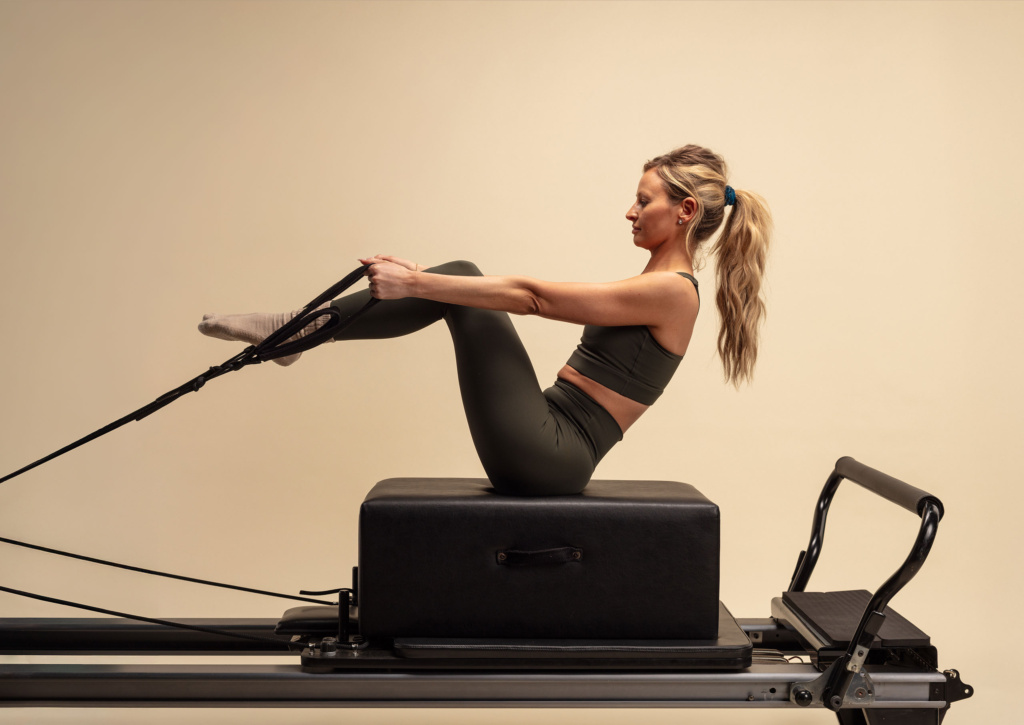
- Leg strap work: With feet in straps on the Reformer, the legs move against spring resistance while the pelvis remains stable. This strengthens the hip flexors and extensors, improves control and gently stretches the hamstrings. It also helps you notice if one side of the pelvis lifts or twists, which could contribute to uneven load on the back.
- Modified swan or prone press: Gentle spinal extensions strengthen the muscles along the spine and open the chest. Lying on your stomach with elbows bent and hands pressed into the mat, you inhale and lift the upper body, finding length through the lower back. Keep the pubic bone pressing into the floor and focus on length rather than height. This helps develop the back extensors that support good posture.
Incorporating Pilates into your recovery
Consistency is more important than intensity when doing pilates to help with lower back pain. Starting with one or two sessions per week can be enough to build a routine without overwhelming your body. Then, as you feel stronger, you can increase the sessions and add a third or more. We do advise though, that people with back pain or other health conditions should speak to one of our clinical or physio team for professional advice.
Working with a qualified instructor can make a significant difference. They can adjust the spring tension, modify positions, correct your technique and ensure you are working within your limits. Good instruction also helps you recognise and correct compensations, such as gripping with the lower back or letting the knees roll inward during footwork. If you have an existing injury or feel pain beyond typical muscle fatigue, tell your instructor so they can modify exercises.
One of the reasons Ten Health & Fitness is so effective for back pain recovery is their integrated Circle of Care. Their approach brings together Reformer Pilates, physiotherapy, massage, personal training and clinical exercise in a fully integrated programme. Trainers and therapists collaborate to create a personalised plan and monitor your progress, adapting as you improve. This holistic strategy moves you from pain relief to strength and performance training in a seamless progression. It also recognises that lasting results come from balance rather than pushing through pain. As Ten’s About page notes, you won’t hear cliches like “go hard or go home” in their studios; instead, they focus on relevant, motivating and empowering support.
Practical considerations
- Start slowly and focus on control: Quality matters more than quantity. Keep movements smooth, align your joints and use your breath to support the muscles. If a movement causes sharp pain, reduce the range or seek guidance.
- Engage the whole chain: Back pain isn’t just about the back. Strengthening the glutes, hips, thighs and core can reduce strain on the lumbar spine. Exercises should challenge these areas together rather than isolating them.
- Complement other treatments: Reformer Pilates works well alongside physiotherapy, massage or other rehabilitation. A physiotherapist can identify why you have lower back pain and advise on exercise progression. Pilates sessions reinforce this work by improving movement patterns and building functional strength.
- Stay consistent: Many people experience relief after a few sessions but lasting change takes time. Regular practice helps create new movement habits, improves posture and maintains strength. If your schedule is busy, look for classes at times that suit you, such as early morning, lunchtime or evening.
Expert Opinion – Juanita Jordan – Physiotherapist
“Lower back pain is rarely solved by one exercise or treatment. In most cases, you need to look at how your whole body moves. Start with small, controlled movements and build gradually. Focus on keeping the pelvis stable, the core engaged, and the hips moving freely. If your symptoms persist or you notice pain radiating down the leg, consult a professional.
Reformer Pilates can be a powerful tool in your recovery because it helps you strengthen, mobilise and regain confidence in a supported environment. When combined with expert guidance and patience, it can play an important role in reducing pain and helping you return to the activities you enjoy.”