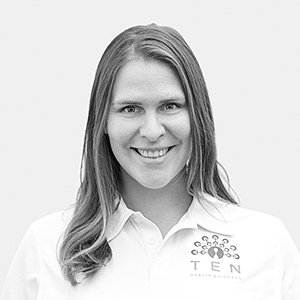
Ruth is a Soft Tissue Therapist and Head of Massage Services at Ten Health. She is originally from Toronto, Canada, where she trained and qualified as a Registered Massage Therapist in 2011. Almost 10 years ago, she moved to the UK to begin the next chapter of her life.
Coming from a system where massage is regulated as a healthcare service, similar to physiotherapy or osteopathy in the UK, she found it a significant adjustment to understand where her work fits within the UK. With no formal regulation of the industry or its education process, it quickly became clear to her that there is often confusion around what a high-quality, clinically informed massage should look like.
Due to her own injury history, it was important for her to align herself with a place that offered DRP Pilates, allowing her to build a trusted referral network. It was Ten’s Circle of Care approach that initially attracted her in 2017, and since then, she has been fortunate to help evolve the service into one that reflects the clinical yet feel-good approach that is standard in Canada.
The Massage Industry
Massage is often misunderstood and sometimes undervalued. Many people see it as an occasional treat or an intense and painful experience. Sessions range from that spa experience, which can feel nice but not quite get the “spot”, to that therapist in your gym that goes hard and talks anatomy but doesn’t quite explain the why behind your pain and it’s hardly ever a pleasant experience.
Even the Sports Massage title does not provide clarity on the skills and knowledge of the therapist. Most will assume the title means they are better placed than the spa therapist to treat injuries but very few will know that a Level 3 Sports Massage Therapists typically only have only had 3 months training and are technically not meant to treat injuries like muscle sprains.
While the UK does not have any protected titles to help the public distinguish between the good and not-so-good, Ten is able to provide certainty that every therapist will be treating with a certain level of expertise. We want to show how massage can support and educate both how you move and how you recover and also create space to step away from stress and reset that feels good and soothes your nervous system.
Within the Circle of Care
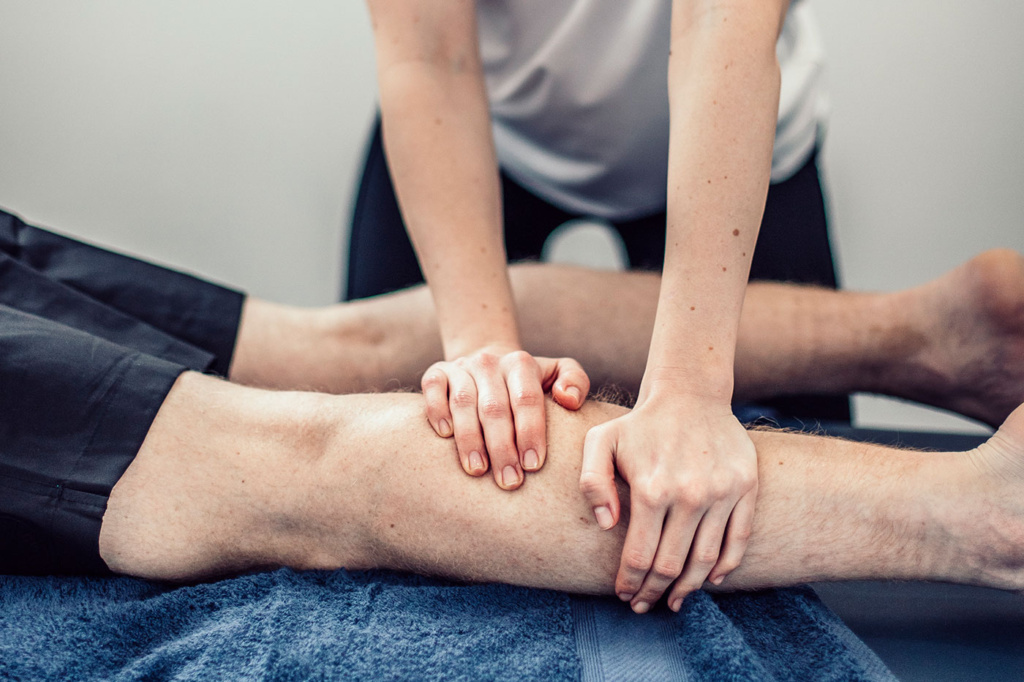
Massage is pivotal within the circle of care. We alone can work alongside physiotherapists, Pilates instructors, and physiologists to support the body from different angles and at any stage of someone’s health and wellness journey. Physiotherapy and Clinical Physiologists helps restore strength and function when injured or have special health factors. Pilates builds control and resilience when fit. Massage supports the quality of the tissue in any state – injured or functioning normally, helping the body respond better to both rehabilitation and training.
This joined-up approach means we are not just addressing symptoms in isolation. We are looking at how your body is functioning as a whole because typically, there is a knock-on effect when we have pain in one part of our body.
Recovery & Prevention
Recently, our Head of massage Ruth, sustained a shoulder injury that resulted in a small fracture, along with significant bruising and inflammation that caused restricted movement. She was off work for over six weeks and spent the first few weeks in a sling, which created additional tension through her neck and upper body. As the bruising settled, fluid pooled into her elbow due to gravity.
Because of her understanding of how the body responds to injury, she was proactive with her treatment, starting early with her team to manage swelling and address the compensations that were already developing. By the time she was seen by the NHS, she was told she was at least two weeks ahead of where they would normally expect someone with a similar injury to be. While recovery is always influenced by multiple factors, manual therapy clearly played a key role in her progress and in preventing further issues.
The Right Treatment Plan for You
Most of us are not dealing with major injuries, but our bodies are constantly adapting to smaller stresses. These show up as everyday niggles. A stiff neck after sleep. Discomfort when picking something up. Pain that eases once you get moving. These are early signs that something is not working as well as it could be.
Massage can be one of the first steps in addressing these issues. It helps reduce tension, improve movement, and support the body before those small problems become bigger ones.
For some, massage is about relaxation. For others, it is a more focused and sometimes intense part of an injury recovery process. At Ten, we bring these together. Treatments should feel good, but they are always delivered with purpose and as part of a plan.
That plan will look different for everyone. It might be a short course of sessions to support an injury, or regular treatments to help manage the demands of training, work, and daily life. It may also involve collaboration with other members of the team to ensure you are getting the right support at the right time.
Our goal is not to create reliance on treatment, but to support your body so it can function and recover more effectively. We will always guide you on what you can do independently, while helping with the areas you cannot address on your own.
Massage at Ten is about combining clinical understanding with the experience people often look for when they book a session. It is both effective and restorative, and it plays an important role within the wider care we provide.
Whether you are recovering from injury, staying active, or managing the physical effects of stress, massage can support you at every stage. If you are curious about how it might fit into your routine, we would love to help you explore that.
Ruth McKinnon
Head of Massage Services, Ten Health