Tennis is one of the most complete sports for whole-body health.
Cardiovascular & Metabolic Benefits
- Boosts aerobic and anaerobic conditioning
- Improves heart health and endurance
- Singles typically burns significantly more calories than doubles due to constant movement and court coverage
Musculoskeletal Strength
- Trains power through the legs, hips and shoulders
- Develops rotational strength and dynamic balance
- Strengthens bones through repeated loading
Mental Wellbeing
- Sharpens focus, reaction speed and decision-making
- Reduces stress through endorphins
- Doubles and group play build social connection
But for all its benefits, tennis can overload certain structures, especially if you’re not conditioned. That’s where Ten’s integrated team shines.
The Muscles That Matter in Tennis
Tennis relies on coordinated work across the whole kinetic chain:
- Shoulder stabilisers – rotator cuff, scapular muscles
- Core and spine stabilisers – obliques, deep abs, multifidus
- Legs and hips – glutes, quads, calves, hip rotators
- Forearm and grip strength – essential for racquet control and injury prevention
When any link in the chain is weak, overuse compensations start to appear. Ten’s physios and trainers work collaboratively to spot these early, correct them with targeted programming, and build resilience.

Warm-Up the Ten Way: Prepare, Activate, Move
A smart warm-up primes the body for speed, rotation and load. We typically recommend 5 minutes of preparation per hour of planned play.
1. Dynamic Movement
- Jogging, skipping, lateral shuffles
- High knees, heel flicks, quick steps
2. Joint Mobilisation
- Hip and ankle circles
- Thoracic rotations
- Shoulder circles and scapular mobility
3. Activation Drills (Ten favourites)
- Glute bridges or banded crab walks
- Dead bugs or anti-rotation holds
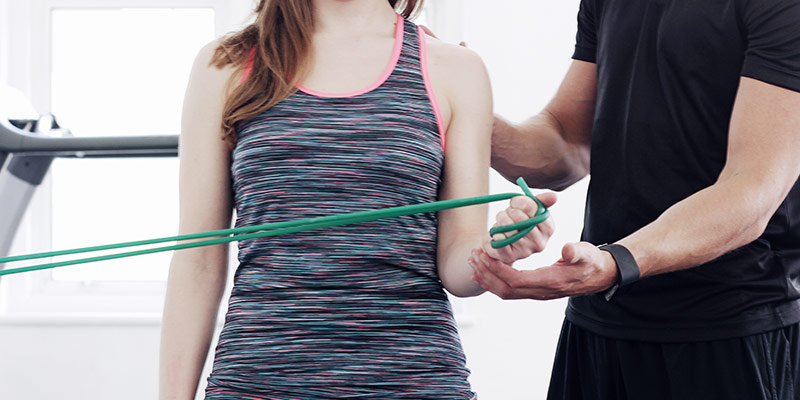
- Banded external rotations and pull-aparts
These activation drills are foundational in Ten’s Clinical Exercise and Reformer Pilates sessions, improving control before power.
Five Essential Shoulder Exercises for Tennis Players
(Performed 10–15 reps, 2–3 sets, 2–3 times per week)
These are commonly prescribed by Ten Physiotherapists and integrated into gym and reformer programmes to enhance coordination, reduce stiffness and protect the shoulder complex.
1. Shoulder Extension
Pull the band down from shoulder height, keeping the spine tall and shoulder blades stable.
2. T-Row
Arms out front, pull back into a T-shape without shrugging or rolling the shoulders forward.
3. External Rotation
Elbow at 90°, rotate upward while keeping the elbow fixed and shoulder blade set.
4. Internal Rotation
Elbow bent at 45°, rotate inward without allowing the shoulder to collapse forward.
5. Overhead Band Press-Out
Arms overhead, push forward slightly while maintaining rib control and neutral posture.
Ten’s physios often blend these with mobility work and manual therapy to correct movement patterns and restore healthy, efficient mechanics.
Strength, Stability & Power: How We Train Tennis Players at Ten
A multidisciplinary team approach allows us to build a balanced programme tailored to the player:
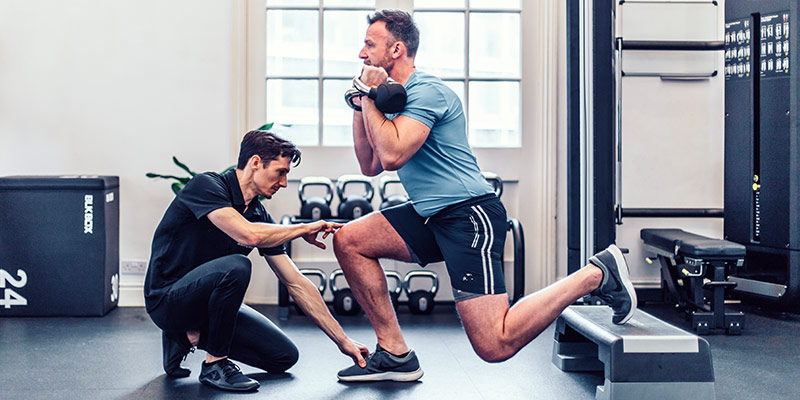
S&C and Gym-Based Work
- Squats, split squats, lateral lunges (8–12 reps)
- Box jumps and lateral bounds (6–8 reps)
- Rows, push-ups, landmine presses
Core & Rotational Training
- Pallof presses
- Cable rotations
- Anti-rotation holds
Resistance Bands & Bodyweight Training
Ideal for home, travel, or courtside warm-ups.
Reformer Pilates for Tennis
A cornerstone of Ten’s method, the reformer enhances:
- Hip and shoulder mobility
- Core integration
- Postural strength
- Rotation control
- Balanced loading across joints
This is why many professionals include reformer Pilates in their weekly training, and why we consider it essential for amateur players.
Injury Prevention & Rehabilitation: The Ten Clinical Approach
Shoulder issues, hip tendinopathy, lower back tightness and elbow irritation are some of the most common conditions we treat in tennis players.
Our approach includes:
- Load management
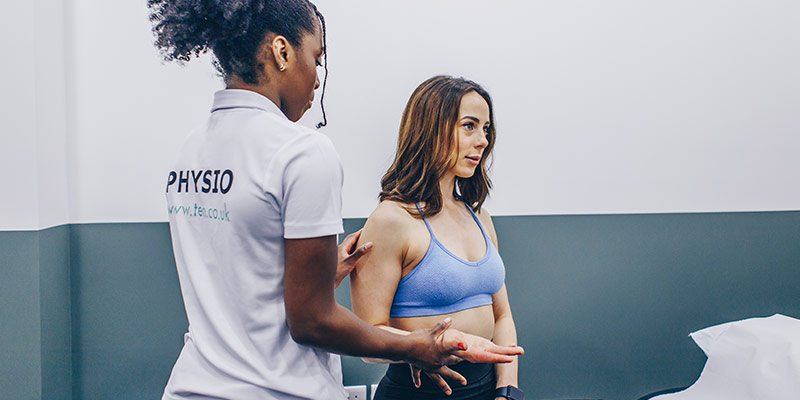
- Biomechanical assessment
- Soft-tissue and manual therapy
- Strength and stability reconditioning
- Corrective movement and personalised exercise plans
Early-Stage Rehab Examples
- Isometric external rotations
- Scapular setting drills
- Gentle wall slides
- Controlled banded rotations
Ten Physiotherapists work closely with our Pilates and S&C team to ensure a smooth progression from pain relief to performance, something few clinics offer under one roof.
The Role of Clinical Massage Therapy at Ten
Our Clinical Massage Therapists are trained to work closely with the Physio and Pilates teams to support both performance and rehabilitation.
Massage therapy can help tennis players by:
- Reducing muscle tension around the shoulders, hips, and lower back
- Improving tissue elasticity and range of motion
- Supporting recovery between matches or training sessions
- Relieving tightness from repetitive strokes and rotational patterns
- Helping manage tendon irritation and overuse symptoms
- Enhancing circulation and reducing post-session soreness
Many of our tennis-playing clients benefit from incorporating regular Clinical Massage into their training plan—either as part of ongoing recovery, or as targeted treatment during periods of high load or tournament play.
This shared-care model ensures that your therapist, physio, and trainer communicate seamlessly, so every session supports your wider goals.
Get Your Equipment Checked
Racquets, grip size, string tension, shock absorption, these all affect joint loading.
A Ten physio or a tennis coach can help ensure your equipment works with your biomechanics, not against them.
Cool Down & Recovery
Recovery is part of performance, and a priority at Ten.
1. Light cardio
A few minutes of gentle movement helps bring the heart rate back down and signals the body to shift into recovery mode.
2. Static stretching
Hold stretches for the shoulders, hips, hamstrings, calves and spine for 20–30 seconds each, focusing on ease of breath and relaxed posture.
3. Soft tissue & myofascial recovery
- Foam rolling for quads, calves, glutes and lats
- Forearm soft-tissue release (highly useful for frequent players)
- Gentle mobility resets to restore normal range
- Clinical Massage Therapy sessions to address tightness and promote tissue recovery
4. Cryotherapy at Ten King’s Cross
For players managing heavy training loads or persistent soreness, Cryotherapy at our King’s Cross studio offers a high-performance recovery option.
Benefits include:
- Reduced inflammation and joint irritation
- Faster recovery between matches or training blocks
- Decreased muscle soreness
- Improved circulation and energy post-session
It’s an excellent complement to Physiotherapy, Massage Therapy, Clinical Exercise and Pilates, and a valuable tool for players pushing their performance while minimising injury risk.


