Services
Reformer Pilates Classes
Start here if you're new to all of this, haven't exercised in a while, or are looking to refine and practice your technique at a gentler pace.
LEARN MOREFor established Beginners thinking about stepping up to Intermediate. Learn how familiar exercises are transformed and get to grips with some more challenging exercises.
LEARN MOREA step up in pace and intensity, and definitely not for first-timers. Expect a varied and challenging workout with more functional progressions and an emphasis firmly on effort and results.
LEARN MOREWe know that the idea of stepping up a level can be intimidating, but it doesn’t have to be – and we’re here to help. Whether you’re preparing for Intermediate or Advanced level, our transition classes are designed to gradually introduce you to the exercises, progressions and level of difficulty you’ll be facing, at a slower pace.
LEARN MORELet Pilates help strengthen your body for an easier labour and a faster recovery. Safe and specially designed for women in their second and third trimester.
LEARN MOREAdding a Jumpboard to our Reformers brings plyometric and cardio benefits. A demanding workout, expect to sweat, and feel your legs (and lungs) burning.
LEARN MOREUsing this most versatile and effective pieces of exercise equipment to enable a deeper and more thorough stretch than you could achieve unassisted.
LEARN MOREThis small group class uses a range of Pilates equipment, including the Reformer, the Tower, the Split Pedal Chair and the Ladder Barrel to add extra variety. Challenge your body in new ways, with an emphasis on precision and control.
LEARN MORE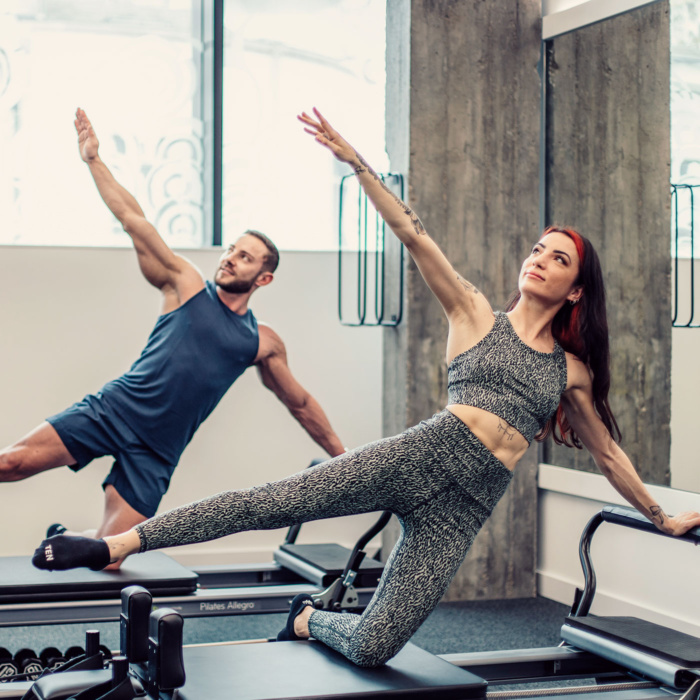
Pilates At Ten
Think pilates, but with extra bite.
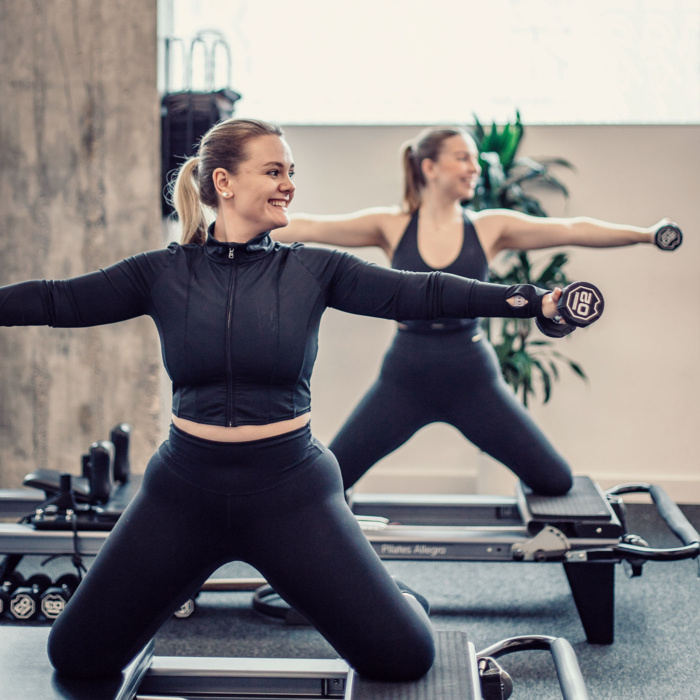
Yes, Ten’s Dynamic Reformer Pilates offers all the postural, flexibility toning and injury-prevention benefits of traditional Pilates. But it goes a step or three further. Along with our own refinements, we’ve added elements from other exercise disciplines, including circuits, weights and spin.
The result is an intense and demanding full body-workout that sculpts figures, builds lean, toned muscle, fast, and will leave you buzzing with endorphins.
If you’re new to Ten or to the Reformer, your first class should be a Beginners session, regardless of your fitness level. This is to make sure that you’re familiar with the Reformer, and comfortable with the techniques you’ll be using.
Pilates At Ten
What is Reformer Pilates?
Quite simply Reformer Pilates is Pilates performed on a Reformer machine. One of the most adaptable and effective pieces of exercise equipment available, the Pilates Reformer allows a greater number of exercises than is possible just using a mat. The Pilates Reformer is essentially a low frame, with a sliding platform (or carriage) on which you lie, sit, kneel or stand to perform different routines. The carriage is connected to the Reformer frame by a series of springs that can be adjusted to provide more support, and thus make an exercise easier, or to increase resistance and/or instability to increase the difficulty and challenge of the routine.
BENEFITS OF PILATES
Pilates is one of the best all-round forms of exercise available. There are too many advantages to list them all but here are 10 key benefits:
- It’s a great, highly effective and time-efficient full body workout.
- It strengthens the core – the muscles that support the hips, spine and neck – really important for anyone who spends hours a day at a desk, or hunched over a laptop or a screen because it improves spinal alignment and reduces the risk of posture-related pain or injury.
- It improves muscle strength, endurance and tone – particularly around the abdominals, lower back, hips and glutes.
- It improves posture, flexibility and balance – essential for our physical wellbeing, but too often lost thanks to today’s sedentary lifestyles.
- It’s prehabilitative – meaning that it doesn’t just make you stronger and fitter, it also helps prevent injury.
- It’s mindful and immersive – a valuable time-out from the pressures of work and day-to-day life. Promoting focus, presence and concentration, it’s a great way to reduce anxiety and stress.
- It’s low impact, and suitable for people of all ages and abilities.
- It’s great for improving strength and control of your Pelvic Floor – one of the most important, but most overlooked and under-trained muscle groups in the body.
- By improving your posture, strengthening, toning and lengthening your muscles, you’ll stand taller and look leaner.
- You feel and see the benefits fast. As Joseph Pilates said “In 10 sessions, you’ll feel better, in 20 sessions you’ll look better, and in 30 sessions you’ll have a completely new body.”
THINGS TO CONSIDER
BOOKING YOUR FIRST CLASS
-
1 START WITH BEGINNERS
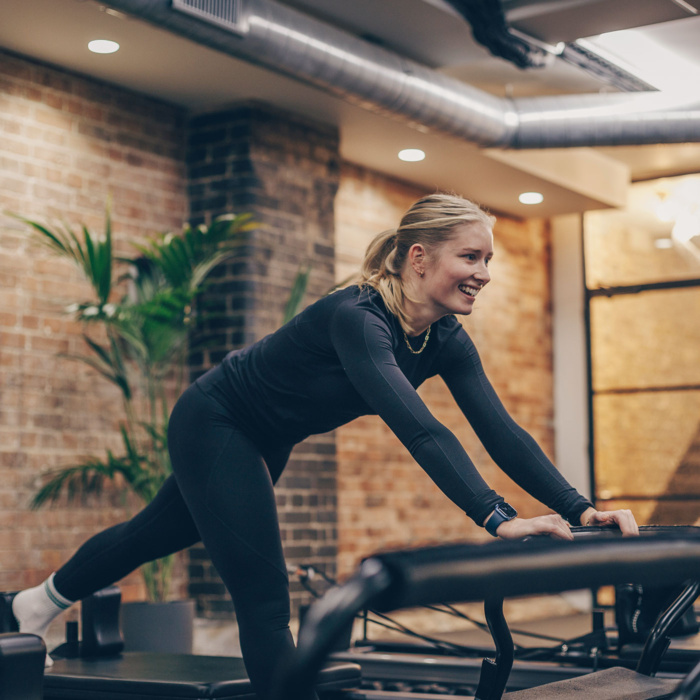
If you’re new to Reformer Pilates or Ten, we recommend starting with a Beginners Class. It’s not a reflection of your strength or fitness, but advised to help you get comfortable with the Pilates Reformer, understand the terminology we use and learn the techniques involved.
-
2 BOOK WITH OUR INTRO OFFER
Our Reformer Pilates introductory offer gives you your first 3 Classes for just £57. Not only is it the best value per session you’ll find, but it’s also perfectly packaged to help you experience more of our trainers and start making progress towards your goals.
-
3 BRING YOUR GRIP SOCKS
Grip Socks provide the necessary stability you’ll need during your workout, and are compulsory for all Reformer-based classes. Don't worry if you don't have any; they are available for purchase from the studio reception at just £12 for your first pair.
Dynamic Reformer Pilates vs Classical Equipment Pilates
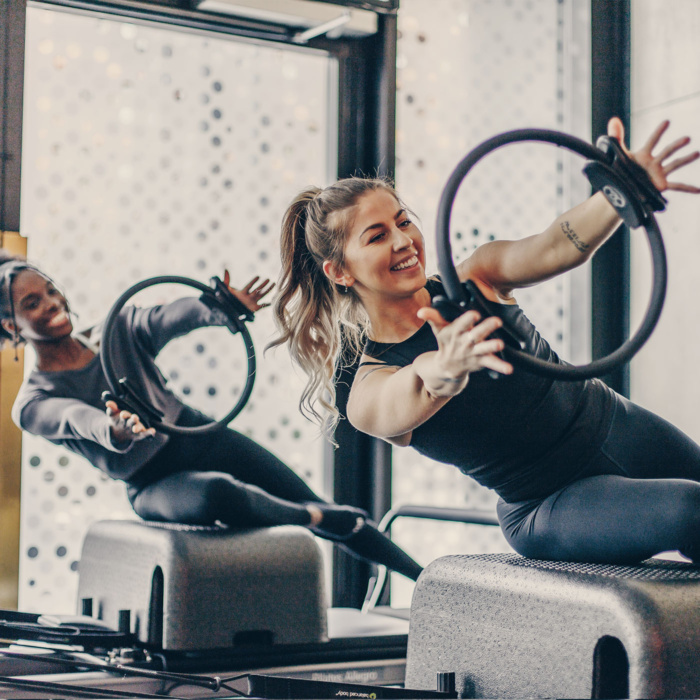
At Ten, Pilates isn’t treated as a single discipline. We offer both Dynamic Reformer Pilates and Classical Equipment Pilates because they serve different purposes and together, they deliver stronger, more sustainable results.
While both approaches are built on the same foundations of control, alignment and strength, the way they are applied and the experience they create is distinctly different.
-
What is Classical Equipment Pilates?
Classical Equipment Pilates is the original method created by Joseph Pilates, who referred to it as contrology. Rather than treating exercise as isolated movements, the method was designed to train the body as a whole. The focus is on strength, control, mobility, posture and coordination working together.
A large part of the practice centres around controlled movement and breathing. The aim is to build stability through the core while improving the way the rest of the body moves and functions. At Ten, Classical Equipment Pilates uses a wider range of apparatus than standard reformer classes, including:
- Cadillac
- Tower
- Split Pedal Chair
- Ladder Barrel
Using different pieces of equipment allows exercises to be adjusted more precisely depending on experience level, mobility and training goals. For some people, Classical Pilates is about refining technique and correcting movement habits. For others, it is a way to build strength gradually while improving flexibility and overall body awareness.
-
What is Dynamic Reformer Pilates?
Dynamic Reformer Pilates takes the principles of traditional Pilates and applies them in a more fast-paced, athletic format. Classes are performed on the Reformer and flow continuously from one movement to the next, with fewer pauses between exercises.
At Ten, Dynamic Reformer classes are designed to challenge:
- Strength
- Stability
- Muscular endurance
- Coordination
- Core control
Sessions often include longer working sets, higher repetitions and more dynamic resistance changes, while still keeping the focus on alignment and technique. The overall style is more physically demanding than traditional Pilates, but the movements remain controlled rather than rushed.
Many clients enjoy Dynamic Reformer because it combines strength training, mobility work and conditioning in a single session.
-
Why do we programme both Classical Equipment Pilates and Dynamic Reformer Pilates?
Classical Equipment Pilates and Dynamic Reformer Pilates come from the same Pilates foundations, but they feel quite different in practice.
Classical Equipment Pilates tends to be slower, more technical and focused on precision. There is more time to focus on alignment, control, precision and how the body is moving. It is especially useful when we want to build strong foundations, improve technique or work on areas of imbalance.
Dynamic Reformer Pilates has a more continuous pace. The movements flow together more quickly, creating a stronger conditioning effect. It still requires control, but there is greater emphasis on endurance, rhythm, and maintaining good movement quality as the body fatigues.
In our Classical Equipment Pilates sessions, the focus may include:
- Technique and precision
- Postural alignment
- Controlled movement
- Foundational strength
- Addressing muscular imbalances
In our Dynamic Reformer Pilates sessions, the focus may include:
- Full-body conditioning
- Muscular endurance
- Increased intensity
- Strength under fatigue
- Continuous movement flow
Classical Equipment Pilates may use equipment such as the Reformer, Cadillac, Tower, Ladder Barrel and Split Pedal Chair.
Dynamic Reformer Pilates classes are performed on the Reformer only.
Many members benefit from combining both approaches. Classical Equipment Pilates helps refine how you move, while Dynamic Reformer Pilates helps you build strength, stamina and confidence in a more flowing class format.
FAQ
GOT QUESTIONS?
WE’VE GOT ANSWERS!
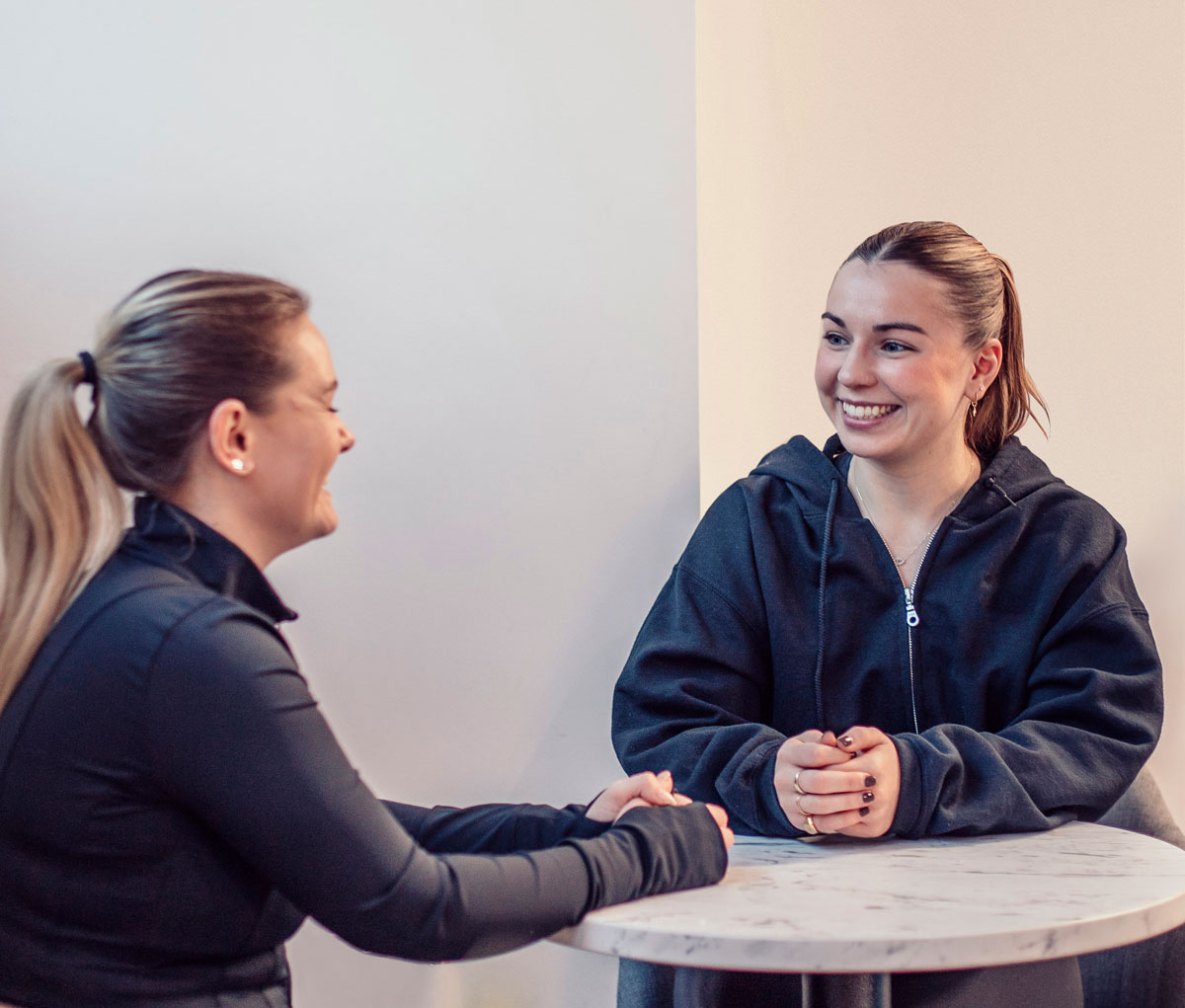
Still have questions? Read our full FAQs or contact our team, and we'll be happy to assist
-
Which class should I start with?
If you’re completely new to Reformer Pilates, a Beginners Pilates Class is usually the best place to start. Beginner sessions help you get comfortable with the equipment, understand the language used in class and learn the foundations of safe movement and good technique.
It isn’t about fitness level. Even if you train regularly, it’s worth learning how the Reformer works first so you can move with confidence and get more from each session.
If you’re unsure which class is right for you, get in touch with our team and we’ll be happy to point you in the right direction.
-
Who can do Reformer Pilates?
Reformer Pilates can suit people of all levels, from complete beginners to those who already train regularly. Clients need to be aged 18 or over to attend classes.
Because it is low-impact, it can be a useful way to build strength without putting too much pressure on your joints. Your instructor can also adapt exercises around your mobility, experience and any injuries or concerns you mention before class.
People often come to Pilates to support:
- Strength and conditioning
- Posture
- Injury prevention
- Rehabilitation
- Pregnancy and postnatal recovery
- Flexibility and balance
- Sports performance
Many men also find Pilates useful because it works areas that can be missed in traditional strength training, especially mobility, coordination, control and posture.
-
Can I still do Pilates if I have an injury?
In many cases, you can still do reformer pilates if you have an injury, yes. Pilates is frequently used as part of injury recovery and rehabilitation because movements can be adjusted to reduce strain while improving strength and stability.
If you have a significant injury, ongoing pain or a recent surgery, it is important to speak with a Trainer before joining a class. Depending on your situation, you may also be asked to provide medical clearance.
For more tailored support, our Physiotherapy team can assess your injury and help guide you towards the safest and most effective way to return to movement.
-
What should I wear to class?
To a pilates class, you should wear clothing that is comfortable and easy to move in. Most people choose leggings, shorts, fitted t-shirts or workout tops.
Clothing that is too loose can make it more difficult for Trainers to check posture and alignment during exercises. Grip socks are required for all Reformer-based sessions at Ten.
-
How often should I do Reformer Pilates?
There is no single answer to how often you should do Reformer Pilates, as it depends on your goals, fitness background and how well your body recovers.
That said, consistency tends to make the biggest difference. Many clients notice improvements in strength, mobility and technique when they attend classes regularly each week.
If you’re unsure where to start, a Trainer can help recommend a schedule based on your experience level and goals. You can also read our guide on how many classes you should do a week for more advice.
-
What is Dynamic Reformer Pilates?
Dynamic Reformer Pilates takes the principles of traditional Pilates and applies them in a more fast-paced, athletic format. Classes are performed on the Reformer and flow continuously from one movement to the next, with fewer pauses between exercises.
At Ten, Dynamic Reformer classes are designed to challenge:
- Strength
- Stability
- Muscular endurance
- Coordination
- Core control
Sessions often include longer working sets, higher repetitions and more dynamic resistance changes, while still keeping the focus on alignment and technique. The overall style is more physically demanding than traditional Pilates, but the movements remain controlled rather than rushed.
Many clients enjoy Dynamic Reformer because it combines strength training, mobility work and conditioning in a single session.
-
What are the benefits of Reformer Pilates?
Reformer Pilates can improve both general fitness and overall movement quality. Some of the most common benefits include:
- Stronger core muscles
- Better posture
- Improved flexibility
- Increased mobility
- Better balance and coordination
- Greater body awareness
- Improved muscular endurance
- Reduced injury risk
Dynamic Reformer classes may also help improve stamina and cardiovascular fitness, as the class's pace and flow keep the body working continuously. Over time, many people find this combination of strength, control and endurance carries over into everyday movement, sport and other forms of training.
-
What should I expect during a Dynamic Reformer Pilates class?
In our Dynamic Reformer classes, you can expect them to be energetic, challenging and full-body focused. Movements are linked together in flowing sequences designed to keep the body working continuously.
You should expect:
- Controlled muscular fatigue
- Core-focused exercises
- Hands-on technique corrections
- Progressive intensity
- A strong focus on form and alignment
It is completely normal to feel muscles shaking during slower holds or more demanding exercises. That usually means the muscles are working hard. Good technique is always more important than pushing through poor form.
-
How can I get better results from Pilates?
Progress comes from consistency, good technique and learning how to move with more control, rather than simply pushing harder every session.
A few things that can help you improve are:
- Attending classes regularly
- Focusing on control instead of speed
- Listening to your Trainer’s feedback
- Prioritising good technique
- Building intensity gradually
- Stopping when your form starts to break down
Small improvements in control, alignment and movement quality tend to build quickly over time. The more consistent you are, the more likely you are to notice changes in strength, mobility, posture and confidence in class.
-
Where can I learn more about Reformer Pilates?
Our blog covers a range of Pilates topics, from beginner advice to training tips and recovery support. It’s a useful place to learn more about Reformer Pilates, understand how to progress safely and get more from your sessions.
Topics include:
- Beginner advice
- Equipment guides
- Mobility and recovery
- Sports-specific training
- Workout tips
- General health and wellness
You can use our blog to explore different areas of Pilates in more detail, whether you’re just getting started or looking to build strength, improve mobility or support a specific training goal.